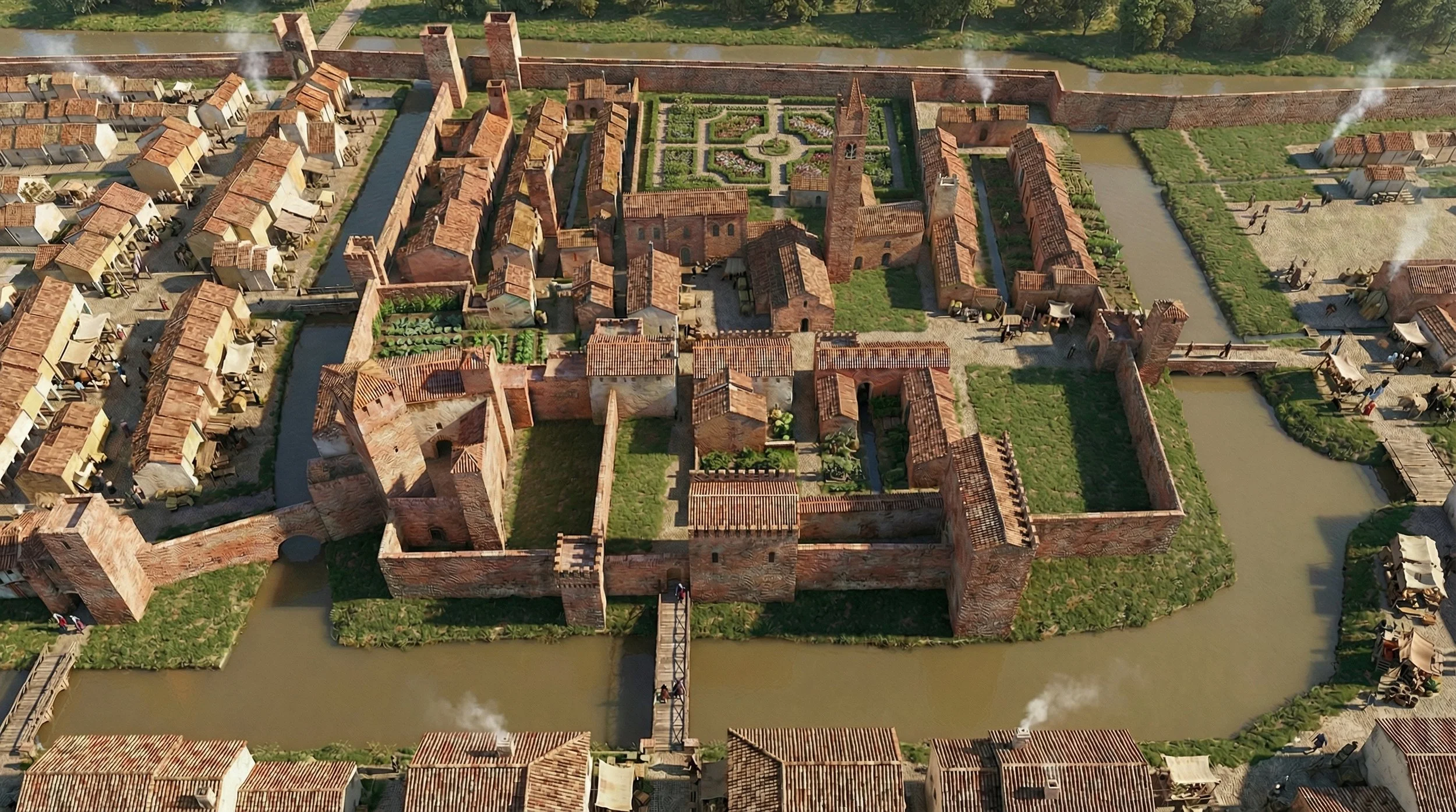
CARPI IN 1472
In the mid-fifteenth century, Emilia is a fragmented land, divided among local lordships, papal domains, and the ambitions of the Sforza and the Venetians. A border region marked by conflict, crossed by mercenary companies and shaped by taxation, looting, and fear. With the Peace of Lodi in 1454, a new possibility emerges: a different time, defined by a relative stability — fragile, yet sufficient to set vital energies in motion once again.
In the cities of Emilia, workshops multiply, skills are refined, and techniques evolve. New tools are experimented with, driven by curiosity and the need to improve daily life. The arts, sciences, and letters find space not only in the courts but also in smaller centers: many towns begin to shape their own industrious identity.
Carpi, a small imperial fief of the Pio family, experiences dynastic tensions. Yet beyond the castle, in the boroughs of streets, gardens, and workshops, the city grows. New walls embrace the settlement, and within them new ideas, initiatives, and exchanges begin to take shape.
Educational Videos
BORGO S.ANTONIO
The first settlement outside the ancient walls
BORGO FORTE
The southern defenses of the castle and the Old Market
BORGO S.FRANCESCO
The first convent and the transformation of the city
CASTEL NOGLIOSO E BORGO NUOVO
The Renaissance in Carpi
Watch the videos that расскаunt the origins and daily life of the boroughs: from their beginnings around the castle of Matilda of Canossa to the later developments of the Renaissance.
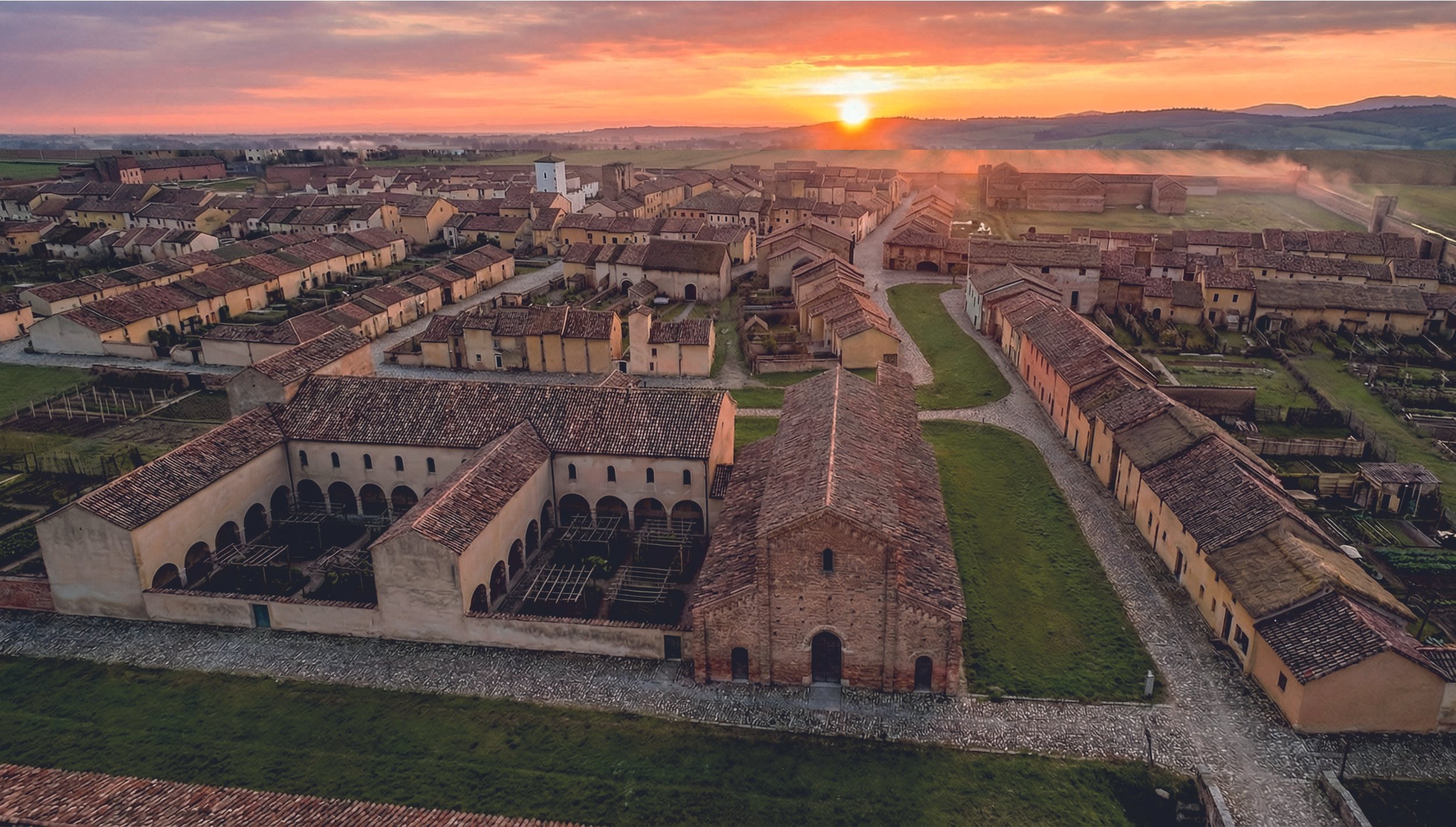
CASTELVECCHIO
At the origins of the city
How It Was Built
The traditional house that conveys the history of the lowland territories is a single-storey dwelling.
The roof, very steeply pitched, sometimes allowed for the creation of loft spaces, though these were mainly used for storage.
Simple to build and practical to use, the single-storey house could be raised in exceptional cases: when the site was prone to flooding or where animals could pose a risk.
With population growth and, above all, with urban development, a new problem emerged: lack of space.
The fifteenth-century city was enclosed by defensive walls, whose construction was extremely costly and imposed as a tax on citizens. The space within the walls was therefore precious and had to be used as efficiently as possible to meet the needs of a growing population.
Houses began to grow vertically: two, three, or more storeys.
However, the increase in height should not suggest a multi-family building. Despite becoming narrower and taller, the fifteenth-century house remained a single-family dwelling, with an entrance from the street and a small strip of land at the back, used as a vegetable garden.
Wood was the most efficient and widely used building material: strong, lightweight, and easy to work with. Entire buildings were constructed in wood — walls, floors, and roof.
Because of its flexibility, increasing the height made structures unstable. For this reason, in the Po Valley a mixed construction technique was soon adopted: brick walls combined with wooden floors and roofs.
To protect the wood from the moisture often retained by bricks, beams were made to project outward so that their ends remained well ventilated and dry. These overhangs also allowed the upper floors to be extended, a feature much appreciated, to the point that city authorities often had to regulate their size and prevent abuses.
Roofs were very steep due to coverings made of straw or reeds, which required slopes of over 100% to ensure waterproofing. Over time, straw bundles were replaced with terracotta tiles to reduce the risk of fire, which was unfortunately very common.
Internal staircases were small and steep, in order to save space.
When not built in masonry, the external walls were filled with a weave of thin branches forming a rigid lattice, which was then plastered both inside and out.
Windows were small and without glass. To protect against the cold, wooden panels (shutters) were closed at night.
Water was drawn from wells. More important buildings had wells and fountains within their premises, while humbler houses shared a communal well, often located at the end of a street or in a small square.
Heating was provided by a fireplace in the kitchen which, in urban houses, was always equipped with a flue reaching the roof ridge. When located on upper floors, the base of the fireplace was made of stone to prevent contact with the wooden structure.
Arcades, fairly common also in Carpi, were built with wooden pillars resting on brick or stone bases. To prevent excessive deformation of the beams above, diagonal braces were added alongside the pillars.
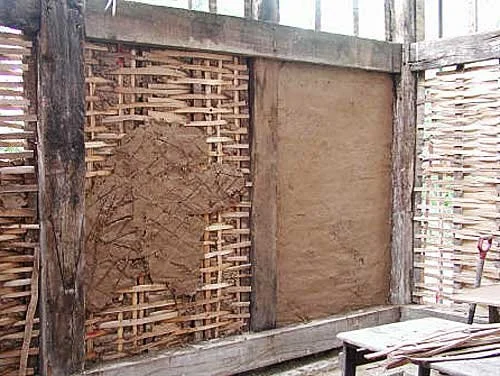
Non-load-bearing wall made of wattle and plaster
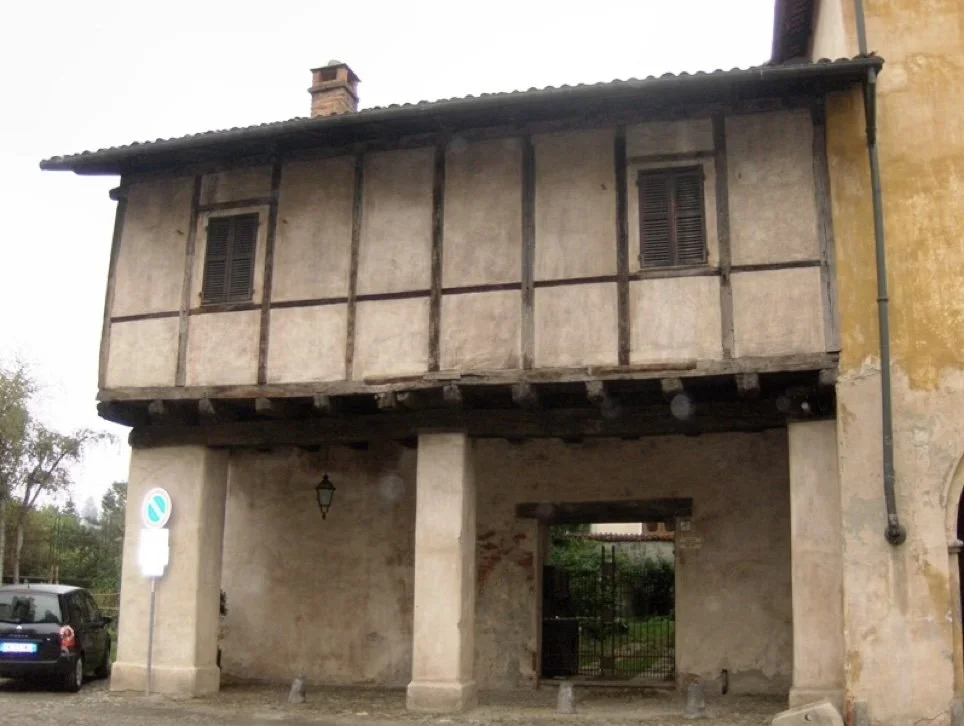
Timber-framed house
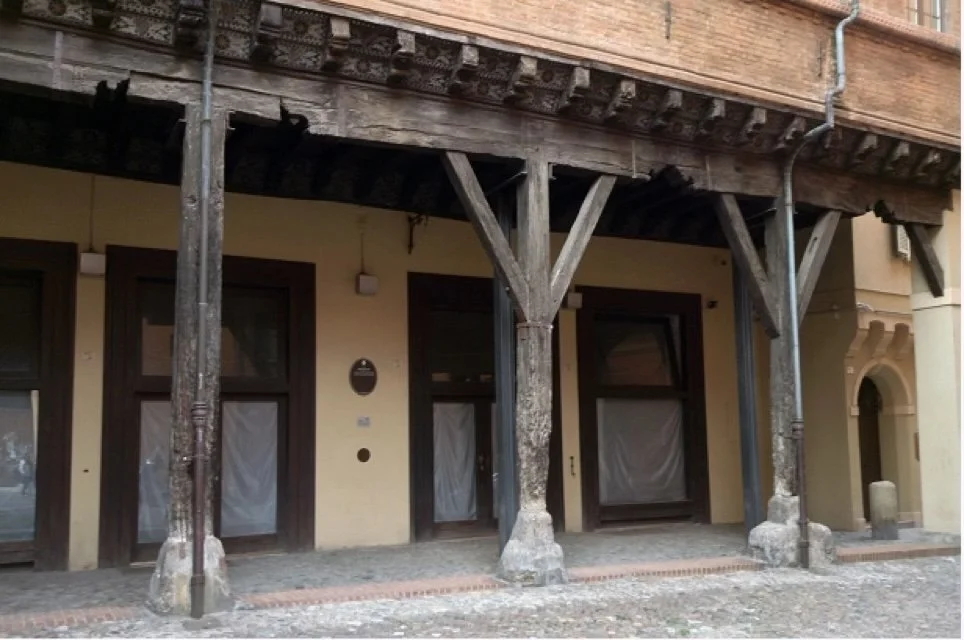
Wooden portico with stone bases
The Water Wheel
Known since antiquity, the water wheel became widely used in the Middle Ages as the main source of energy for human activities.
In lowland areas, such as Carpi, the “undershot” type was most commonly adopted — a wheel equipped with paddles driven by the current of the water flowing beneath it.
Its efficiency was relatively low, harnessing only about 30% of the energy available in the water. However, it had the great advantage of not requiring significant differences in height, or drops, along the watercourse — conditions that are impossible to achieve in flat terrain.
These wheels were designed to be wider rather than taller, in order to capture as much flowing water as possible.
They were rarely built directly on rivers. Instead, a smaller channel — often as wide as the wheel itself — was diverted from the main watercourse to supply the wheel with a steady flow. A system of sluices, upstream and downstream, ensured a constant water level and protected the mechanism from debris carried by the river during floods.
The construction of this derived channel also made it possible to improve the wheel’s efficiency, as it could be designed to concentrate the difference in level between upstream and downstream points near the wheel, increasing the water’s speed at that precise location.
The wheel was connected to mechanisms that transmitted the rotation of its axle to machines requiring power: millstones, bellows and hammers for blacksmiths, fulling hammers for wool processing, and many other devices.
The conversion of rotary motion into back-and-forth motion — necessary for hammers and pestles — was soon achieved through the use of camshafts or systems of cranks and connecting rods.
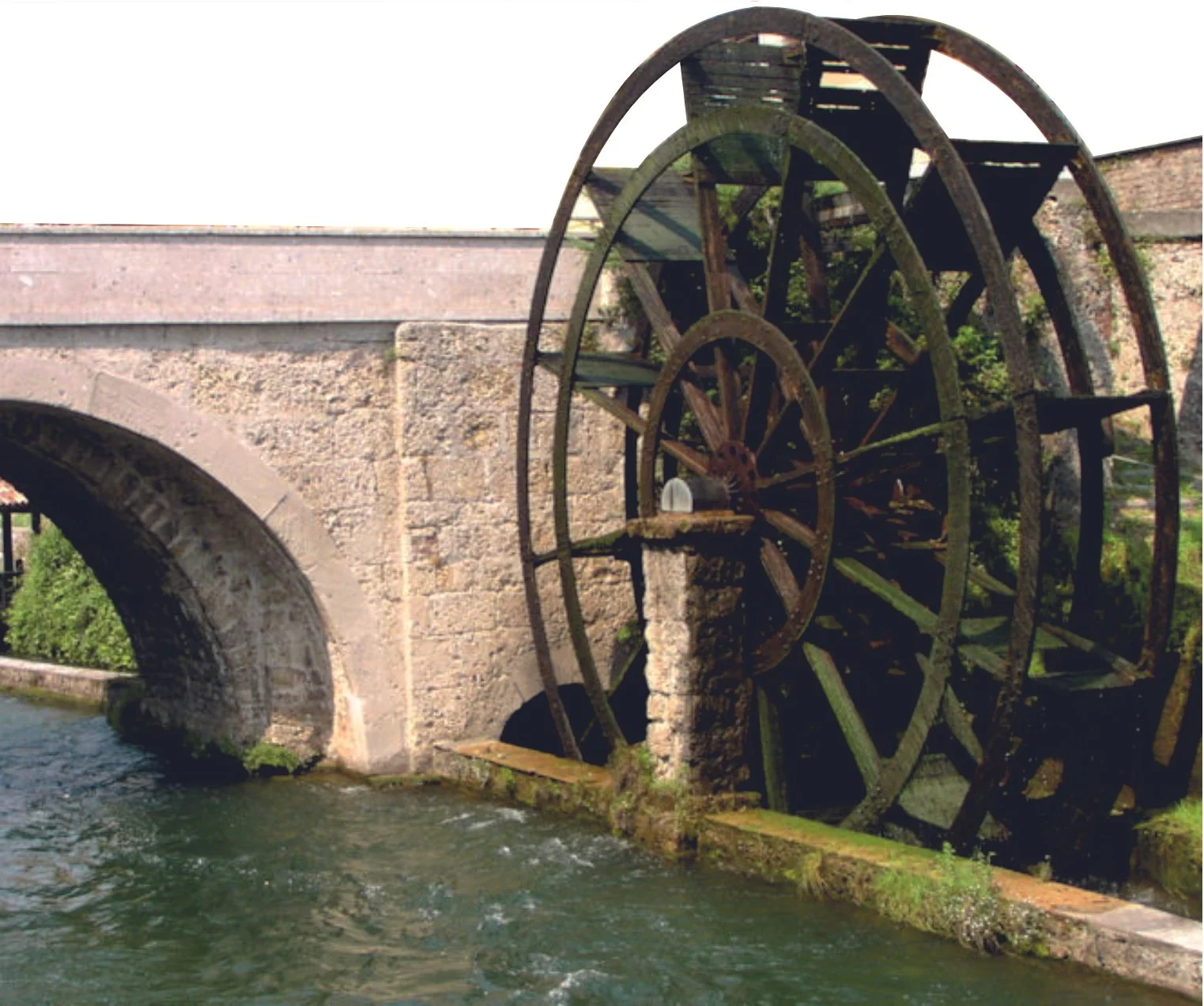
Undershot water wheel
SANTA MARIA IN CASTELLO
(the church of Saint Mary within the castle)
According to tradition, the construction of the church of Santa Maria in Carpi dates back to 752, commissioned by the Lombard king Aistulf.
The earliest document attesting to the existence of the church of Santa Maria in Carpi dates to the ninth century. “It is a letter sent in the year 879 by Pope John VIII to the bishop of Reggio, instructing him to oversee the restoration of the church, which had been destroyed by fire, and at the same time to send the holy chrism for the consecration of the baptismal font.”
The interest shown by the Roman Curia in a rural church suggests that it held a certain importance. A later diploma issued by Berengar I, datable between 916 and 924, reveals that the church of Santa Maria was located within the defensive structures of the castrum of Carpi.
It is subsequently mentioned in several documents from the tenth to the twelfth centuries as a parish church (pieve), headed by an archpriest, served by a college of canons, and with a small territory under its jurisdiction, including the chapels of San Nicolò, San Lorenzo of Gargallo, and San Biagio of San Marino.
In 1001, the Canossa family became lords of the castle of Carpi. At the beginning of the twelfth century, Matilda of Canossa supported the archpriest Federico in the dispute for the autonomy of the church of Carpi from the bishop of Reggio Emilia, allowing it to exercise “direct control over a territory loyal to the papal cause, strategically positioned as a wedge between the bishoprics of Reggio and Modena, which showed sympathies toward the imperial party.”
It was during these years that the church of Santa Maria was rebuilt in Romanesque form, with a basilica plan divided by columns into three naves, each ending in a semicircular apse. The decorative scheme of the exterior of the apse recalls that of the Cathedral of Modena as well as the Abbey of Nonantola.
Only a few sculptural elements from that period have survived. On the exterior, the portal stands out — now set into the sixteenth-century façade, but originally located elsewhere, as it comes from the northern side entrance demolished in 1514.
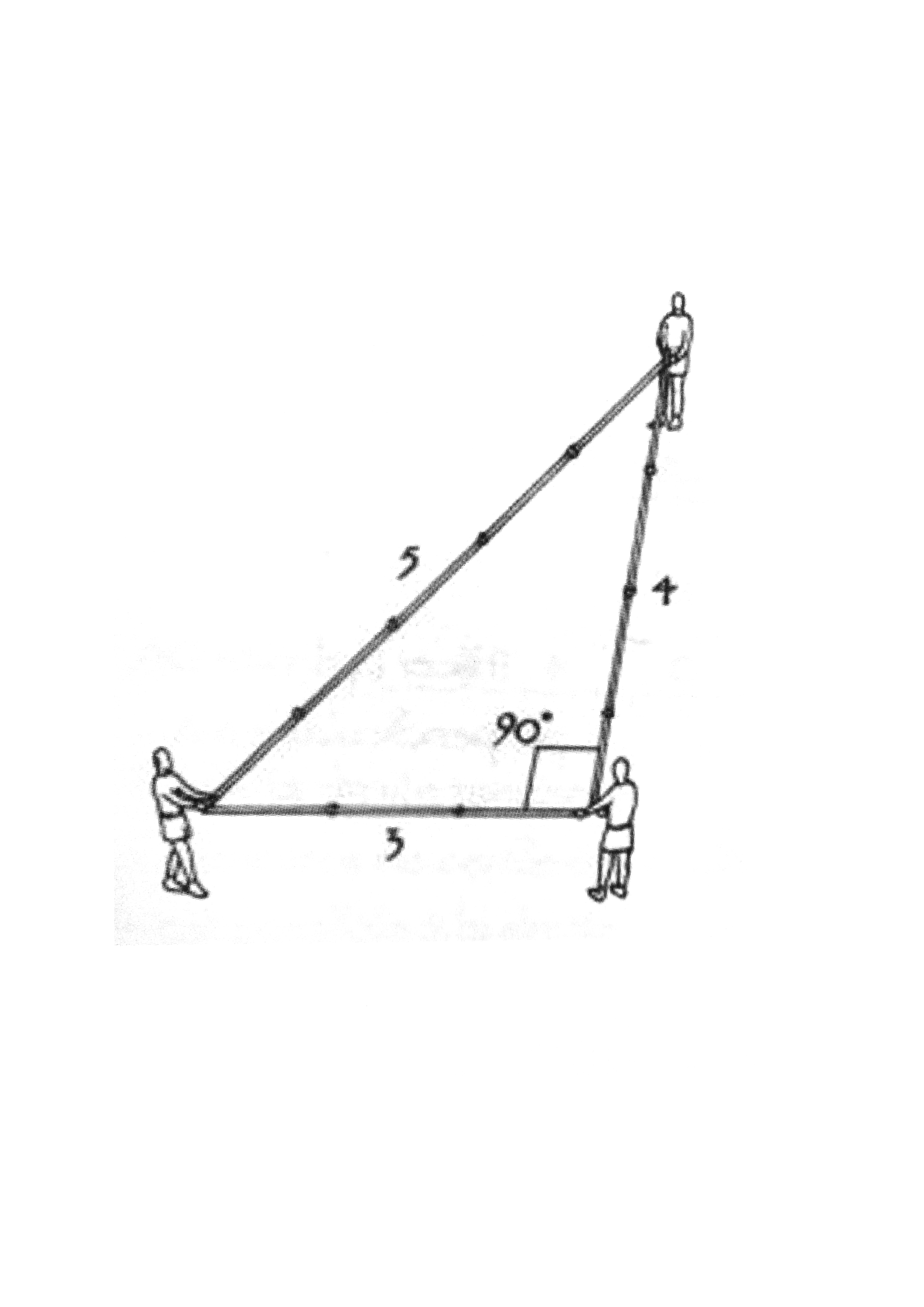
The Romanesque building consisted of three naves: the central nave measured twelve braccia in width, while the lateral naves measured eight. The spacing between the columns was also eight braccia. This scheme was highly effective in ensuring accuracy during construction, as the 12 × 8 rectangle allows the right angles to be verified by checking the diagonal, as shown in the figure.
The entire building is enclosed within a rectangle measuring 28 × 56 braccia (two adjacent squares). This proportion is also reflected in the façade lunette and in the windows of the lateral naves.
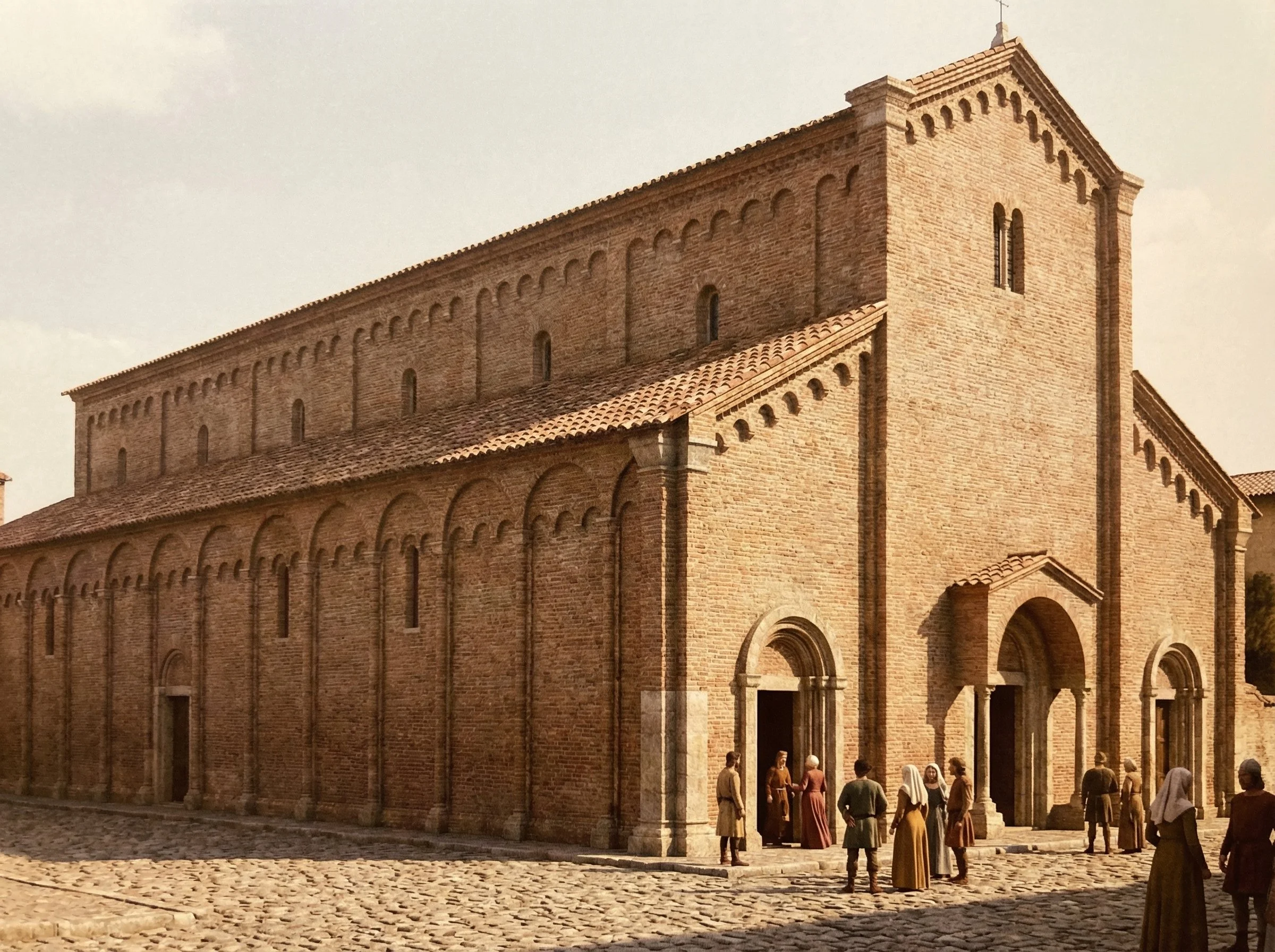
the Matildan church
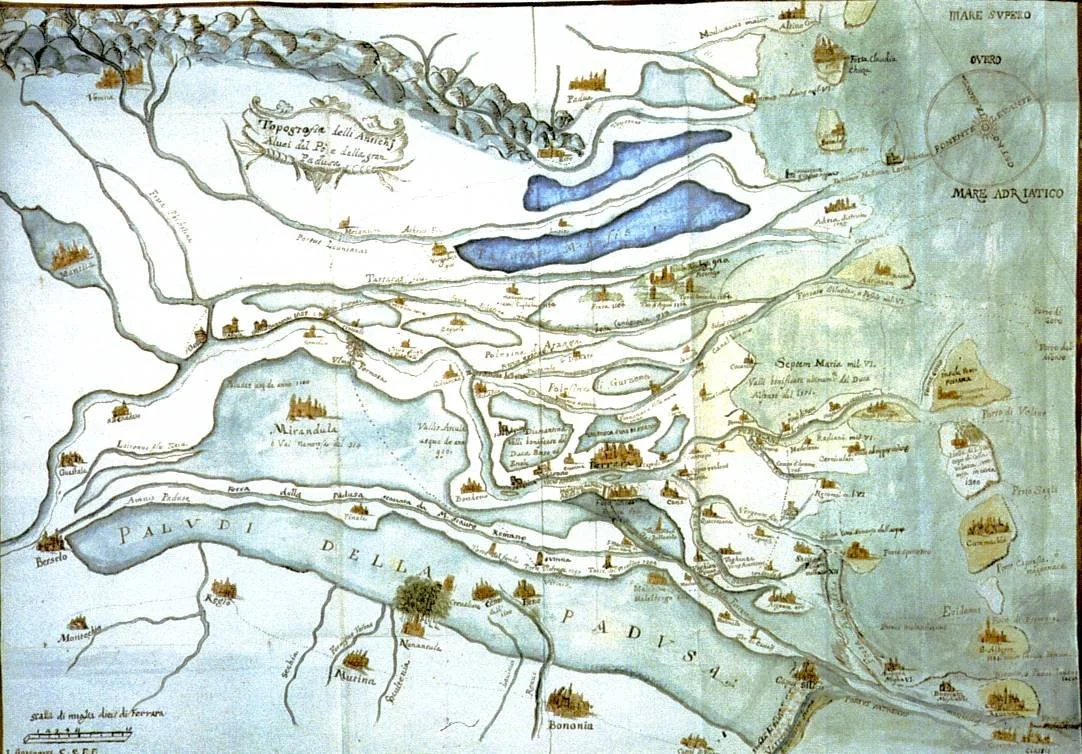
The Surrounding Countryside
The study of contour lines has shown that the castle stands at the edge of the “lowlands,” an area prone to flooding and marshy conditions in winter.
The city’s development toward the south and west is a direct and logical consequence of this.
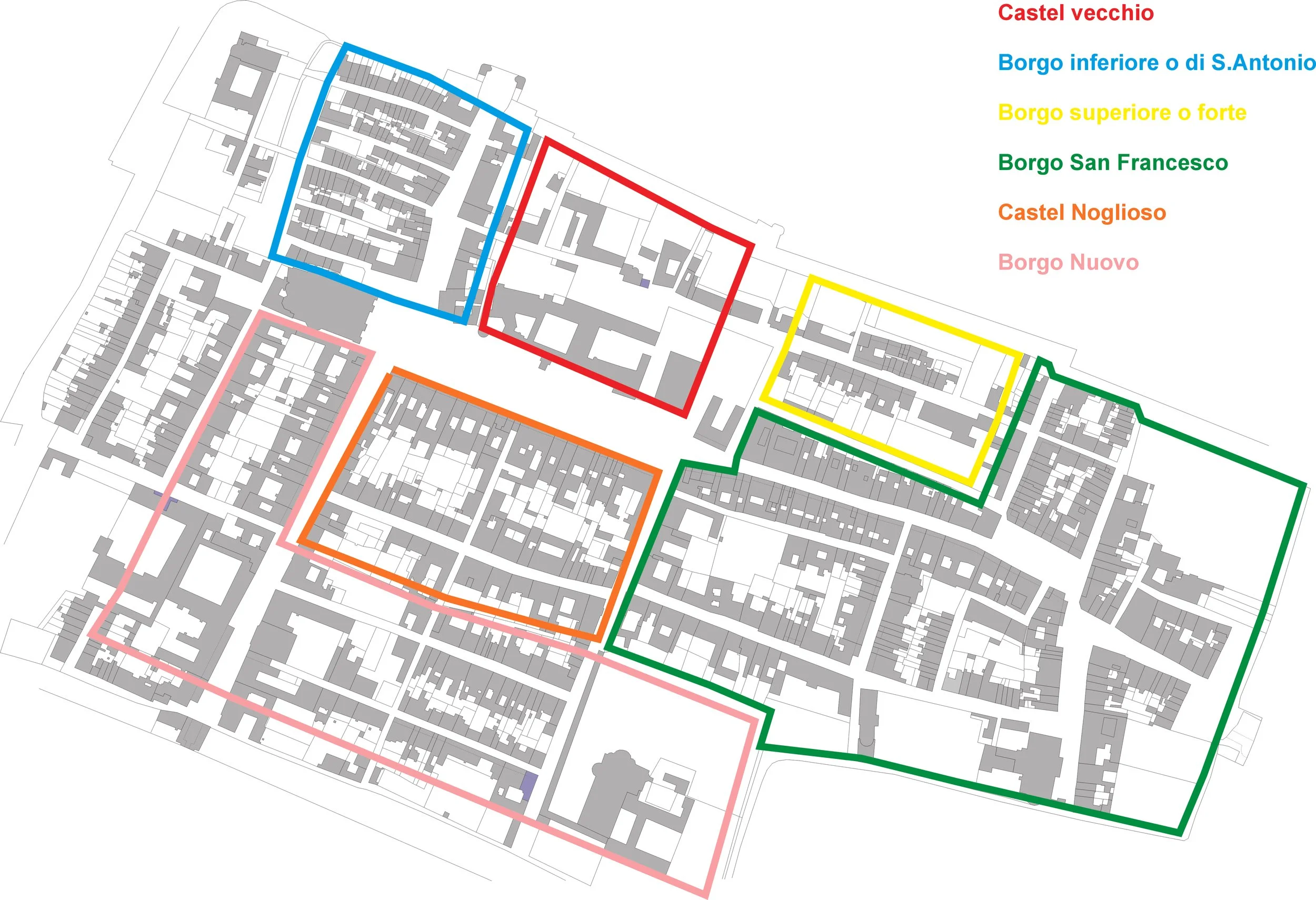
Carpi's Boroughs in 1472
The city was divided into six boroughs, or fortified districts.
The oldest was Castelvecchio, the original nucleus of the city, where Palazzo Pio and the parish church known as La Sagra stand today.
In chronological order, the other boroughs developed as follows: Borgo Sant’Antonio, Borgo Forte, Borgo San Francesco, Castel Noglioso, and finally Borgo Nuovo, which at that time still contained large areas of undeveloped land.
The map shows the boundaries of these boroughs superimposed on the 1890 cadastral map, shortly before the city walls were demolished.