How This Book Began
History never moves in a straight line: it advances in leaps, like climbing a staircase. Each step brings disorientation, and in those moments one must hold on to what truly sustains a community: not power, not the economy, but life together.
From the historical sources of Carpi, I chose to look not at the powerful nor at wars, but at the collective fabric of artisans, technicians, and religious figures. It is there that the strength of sharing becomes visible: like a sailing boat in a storm, more important than the route or the maps are the boat itself and its crew.
The Machine of the Possible tells the story of fifteenth-century Carpi — small and peripheral, yet at the center of a transformation that intertwines craft, ingenuity, and courage. Every daily gesture becomes part of an urban and symbolic tapestry, where cooperation is the true key to progress.
The narrative is an invitation to believe that ideas, fragile at their birth, gain strength only within a community capable of recognizing and supporting them.
Between History and Narrative
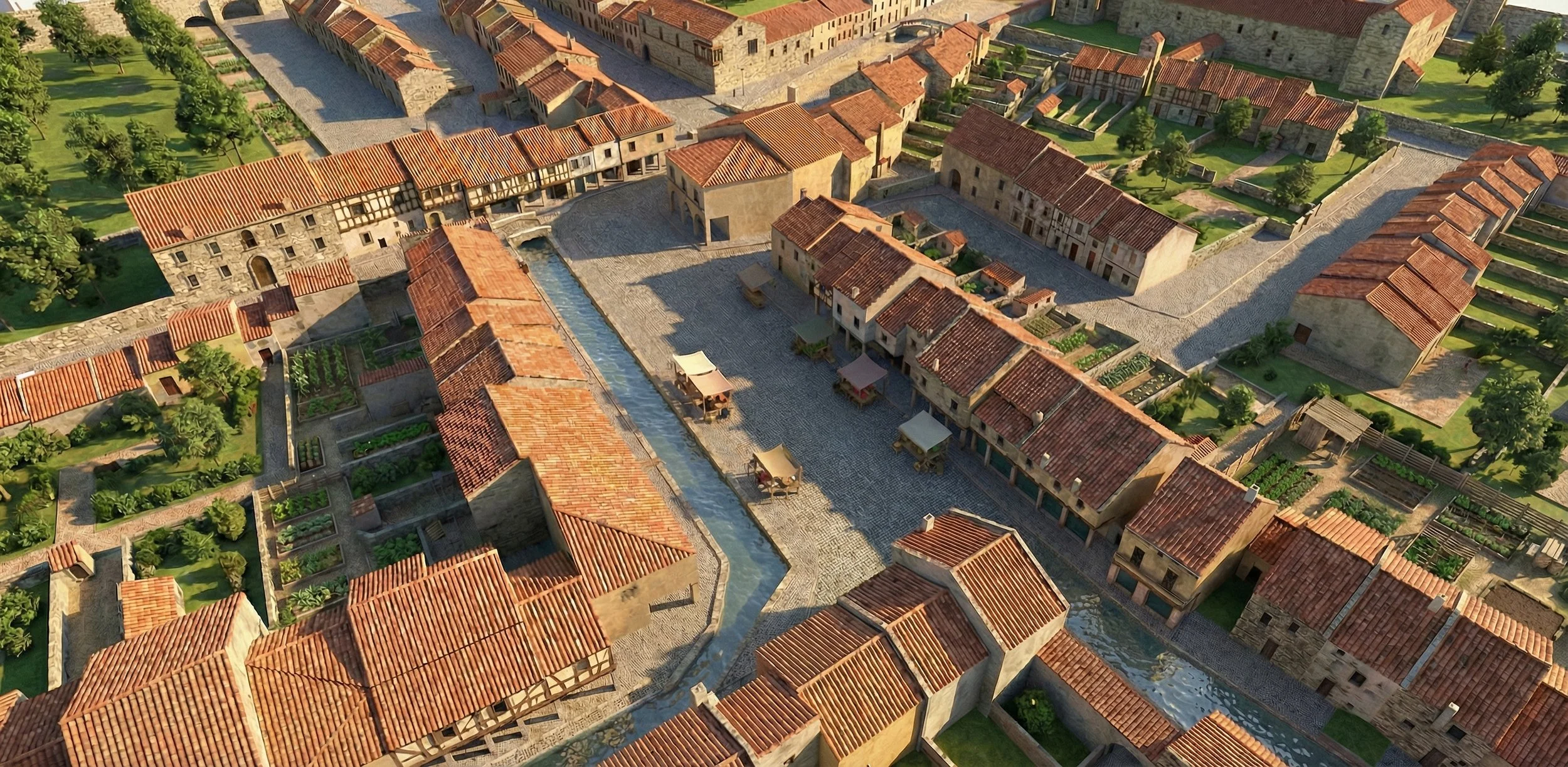
The narrative is grounded in a solid reconstruction of the fifteenth-century city, with its architectural and social characteristics.
The characters are real historical figures: we know where they lived, what work they did, and — thanks to tax records — whether they were relatively well-off or not.
Carpi was a small city in which about 40% of the population was made up of immigrants: from nearby areas, of course, but also from Venice, Milan, Ferrara, Bologna, and even from France and Germany.
The story follows the lives of men and women who, through their work and their choices, take part in the making of the city.