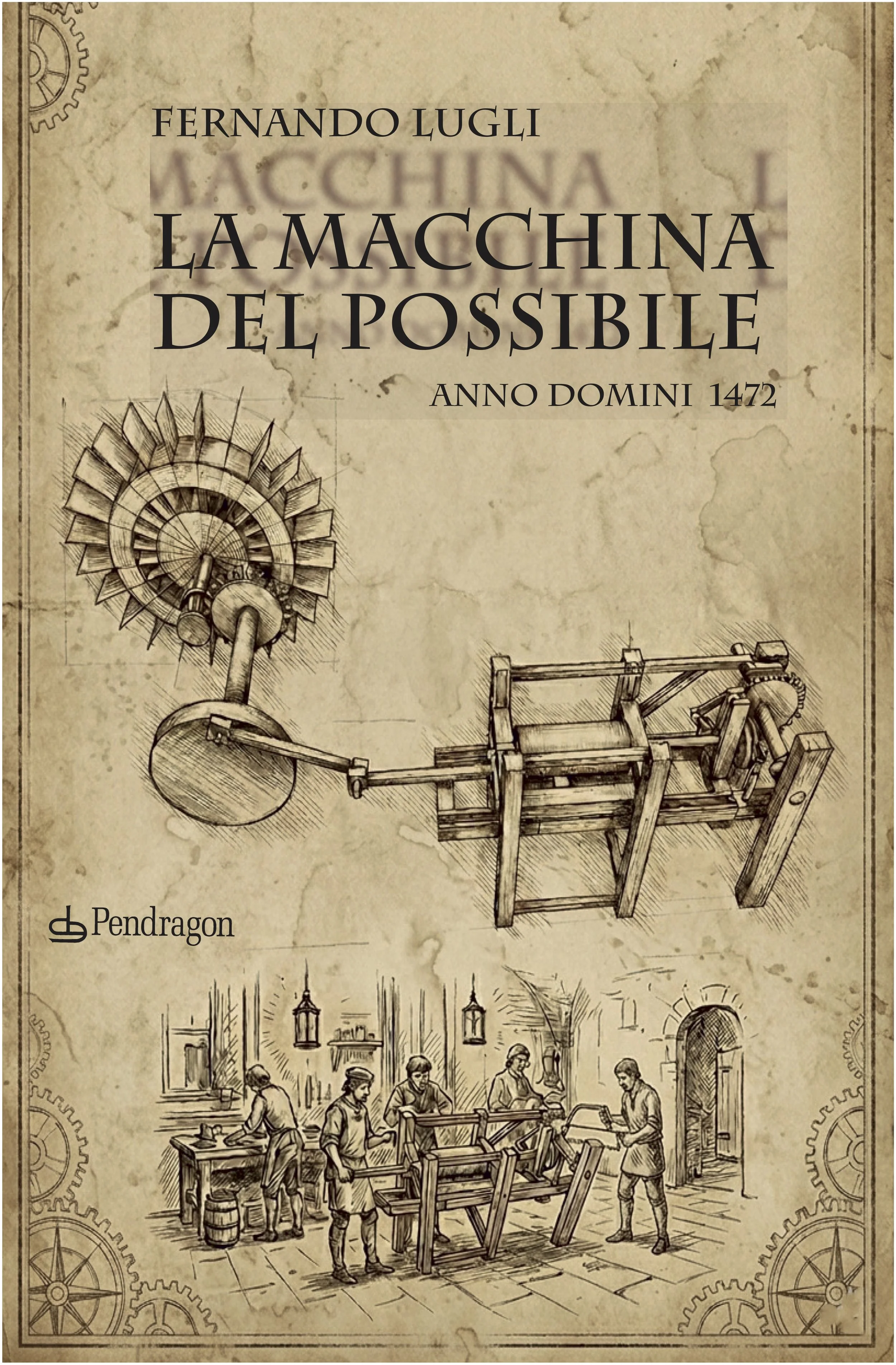
LA MACCHINA DEL POSSIBILE ANNO 1472
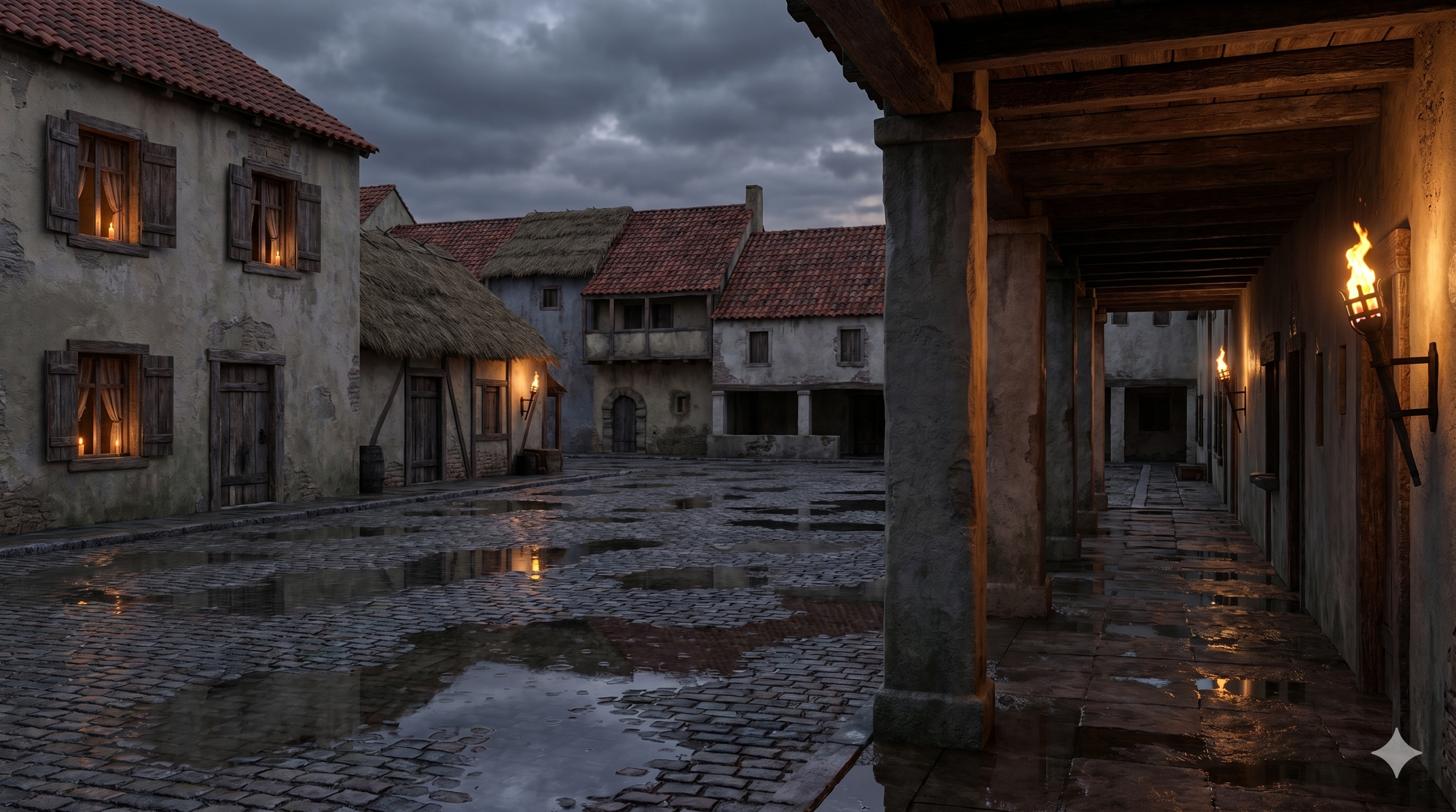
The light of day was giving way to an evening heavy with rain and silence.
The air, thick with moisture, veiled everything beneath a dense and somber haze.
It was a suspended moment, as if the city were about to turn a page without yet knowing it.
With the sky covered by a thick layer of clouds, darkness had fallen early, and night had already arrived.
As he passed beneath the portico of the new market square, Messer Pietro Barabani wondered about the reason for that sudden summons.
“What could the Count want from me? He knows my trade as a builder, but perhaps he senses that I can offer something more.”
The messenger walked ahead of him carrying a metal lantern blackened by soot. The candle stub inside cast only a faint glow, barely enough to illuminate a few steps ahead.
No one else was around.
“Better this way,” thought Pietro. “If someone were to see me, by tomorrow morning the market would be buzzing with rumors: Messer Pietro has a secret… he goes to Count Andrea… and everyone would add inventions of their own.”
Only a black cat wandered through the square, sniffing among the scraps left behind by the poultry merchants.
“A bad omen,” he thought, “but at least he will not speak.”
He knew that road like the palm of his hand:
every stone,
every rut carved by wagon wheels,
every reflection of water upon the paving stones.
And yet that evening the city, which had always seemed to welcome him, now felt as though it were pushing him away. Like a horse refusing the obstacle before it.
The bridge, crossed a thousand times before, now seemed narrower;
the darkness, thicker.
Each step carried him toward something different —
something he could not yet name.
Raising his gaze, Pietro caught sight for an instant of a faint light and two figures at the far end of the street, near the walls and the convent.
“Who is there at the end of the road?” he asked.
“I saw nothing, sir. At this hour, and in weather like this, I doubt anyone would venture outside.”
“And what about us, then?” Pietro replied.
“For us it is different. The Count ordered me to bring you here at any cost.
“Hmm… perhaps it was a mistake…” he murmured, turning his gaze toward the gloomy building looming before him.
Palazzo Bentivoglio was lit by torches on either side of the entrance arch, closed by a heavy oak gate.
The dark red brick façade towered above all the other houses in the borgo and, in the flickering torchlight, inspired a certain fear. Even the small decorated windows looked like threatening eyes.
The battered base wall, at least three braccia high, reinforced its foundations.
On the corner, a small wooden loggia allowed the street to be observed unseen.
“It looks more like a fortress than a palace!” Pietro said.
The messenger did not reply. His task was over, and he was interested only in the hot soup waiting for him.
He knocked on the gate.
While waiting, Pietro had the impression that someone was watching them from a window, perhaps to verify that the order had been obeyed.
“Let him come alone and speak of this to no one,” they had told him.
The gate opened just enough to allow one person through at a time and was quickly shut again.
He felt uneasy: he had imagined a welcome worthy of an honored guest, and instead he felt treated like a thief.
He was led into a hall on the upper floor, brightly illuminated by at least thirty candles: half upon a chandelier, the others in candelabra placed in the corners.
Pietro approached the fireplace. The pleasant warmth revived him, granting him a measure of peace.
At the center of the room stood a rectangular table with four chairs, as though awaiting him.
Count Andrea entered, followed by two men dressed in fine garments.
“Messer Pietro, I thank you for coming. I ask your indulgence for the late hour, but tomorrow morning I depart again for Bologna, and I must speak with you urgently.”
“Your servant, my lord Count,” Pietro replied, bowing.
“Please, let us sit.”
With a gesture unusual for a man of his rank, the Count waited for Pietro to sit before taking his own seat.
The courtesy did not last long. In a stern, almost threatening tone, he said:
“Messer Pietro, tonight none of us are here, and this room does not exist. I summoned you in secret, and what I am about to tell you must remain so. I have a project, but I warn you: there will be adversaries and obstacles.
I need a capable and determined man, and that is why I chose you.”
Pietro, somewhat intimidated, gathered his courage and replied:
“My lord Count, every new construction is a challenge, and I know how to face it.”
“Well said! Your words confirm that I judged rightly in choosing you. Now then, let us return to my purpose. I do not know whether you are aware of the advances in the art of silk-making, thanks to ingenious machines that multiply production.”
“I have heard something of it, but I raise walls and build roofs. That is my trade.”
“Do not concern yourself. If you accept my proposal, you shall have the necessary assistance. The two gentlemen whom I have not yet introduced are master spinners: one is Domenico di Fassi, who lives in Sant’Antonio, and the other is his cousin Francesco.”
The two men inclined their heads in greeting.
“But what do you expect me to do, my lord Count?”
Without answering directly, the Count continued his account:
“As I was saying, my family supports the development of silk production in Bologna. It all began from an idea by Messer Borghesano, a craftsman from Lucca, who built a machine powered solely by the force of water, capable of replacing a thousand spinners.
In Bologna we have perfected it, and now it is spreading throughout the city, especially along the Reno Canal.”
“Bologna is great and fascinating, but I still do not understand how I may be of use to you,” Pietro repeated.
Though respectfully spoken, the question was beginning to reveal a certain impatience.
“You shall understand soon enough,” replied the Count, continuing unperturbed.
“The most powerful families demand an equal distribution of these mills. My attempts to secure an advantage have been in vain. The Piccinino family, in particular, plots against me. In Bologna every step is watched: I trust that here in Carpi I may have greater freedom to act.
So I have decided: I wish to build here in Carpi the extra spinning mill that I cannot obtain in Bologna. What I ask of you is not merely a job: it is the beginning of something that could change the city itself!”
Andrea Bentivoglio was young, yet he had already learned that in politics truth must be held between one’s fingers like a sharp object. He wished to build, yes — but without asking permission.
Perhaps the Count had not chosen Pietro solely for his skill. Perhaps he had sensed, within that reserve, within that rough artisan honesty, the perfect potential for a design that reached beyond stones and beams.
“But I do not build machines, my lord Count. I do not see how I could help you in such a project.”
As he spoke those words, he felt within himself a conflicting voice.
The image of a water wheel driving a thousand mechanisms attracted him like a vision. Why not try?
“For now, we must concern ourselves with something else,” the Count resumed. “We require a water conduit, a weir with a small cascade to power the wheel. I need you to tell me whether it is possible and how it may be done.”
“Where do you intend to build it?”
“Here, beneath your feet. You shall work within my palace and, for now, in the utmost secrecy.”
“And why such secrecy?”
“I cannot tell you more. Consider the proposal. The payment shall be generous, but I warn you: speak neither of this meeting nor of the offer. I could not forgive it.”
Somewhat disturbed, Pietro was escorted home by two servants.
Along the road he wondered whether it was a courtesy or a means of keeping watch over him.
He still did not know what he would decide, yet within him, silent as embers beneath ash, an idea was beginning to take shape.
And an intuition, once it arrives, does not leave.
The canal water running through the middle of the street flowed gently, yet near the castle it tumbled in a brief little waterfall: scarcely more than an arm’s length, but enough to spread a reassuring gurgling sound, ever the same, reliable and faithful.
“Water does not betray,” Pietro thought. “She shall be my ally in this secret undertaking.”
With these thoughts he crossed the threshold of his home.
A thin mist was rising from the east, softening the outlines of the buildings and stripping solidity even from their foundations.
The Count’s palace seemed to have vanished, like a mirage.
The story
Carpi, 1472. The city is still a small but lively center, rooted in traditional crafts and unaware that it is about to encounter the world of mechanical innovation for the first time.
Change emerges from an unexpected source: the mechanism of the Bolognese spinning wheel, known only to Count Andrea Bentivoglio. It becomes the spark of a profound transformation. For the community — which had never conceived of a machine capable of multiplying labor — it is a revelation, fragile and almost unimaginable.
Around this encounter with the unknown move Andrea, Rizola, artisans, and friars, who begin to observe, test, and experiment. Their search does not arise from treatises or established knowledge, but from the ground up: from direct experience, from careful observation of nature, and from the ability to reflect on the tangible effects of their actions. It is a path made of attempts, errors, and small achievements that gradually give shape to a new machine — one capable of producing straw braids year-round and sustaining a new, flourishing market.
This is not only the story of a technical invention: it is the account of a cultural and social transformation. Connections with other dynamic centers — Bologna, Ferrara, Siena — bring ideas, knowledge, and exchanges that nurture growth. The endeavor becomes collective: different hands, minds, and forms of courage intertwine in a process that restores dignity to work and opens new possibilities for the entire community.
The novel tells the moment in which a city discovers its ability to change itself. The machine is not merely a tool: it becomes the symbol of a passage — from the unknown to the possible, from “I” to “we.”
The Machine of the Possible is a universal reflection on how societies evolve through curiosity, trust, and cooperation — enduring values that remain deeply relevant today.
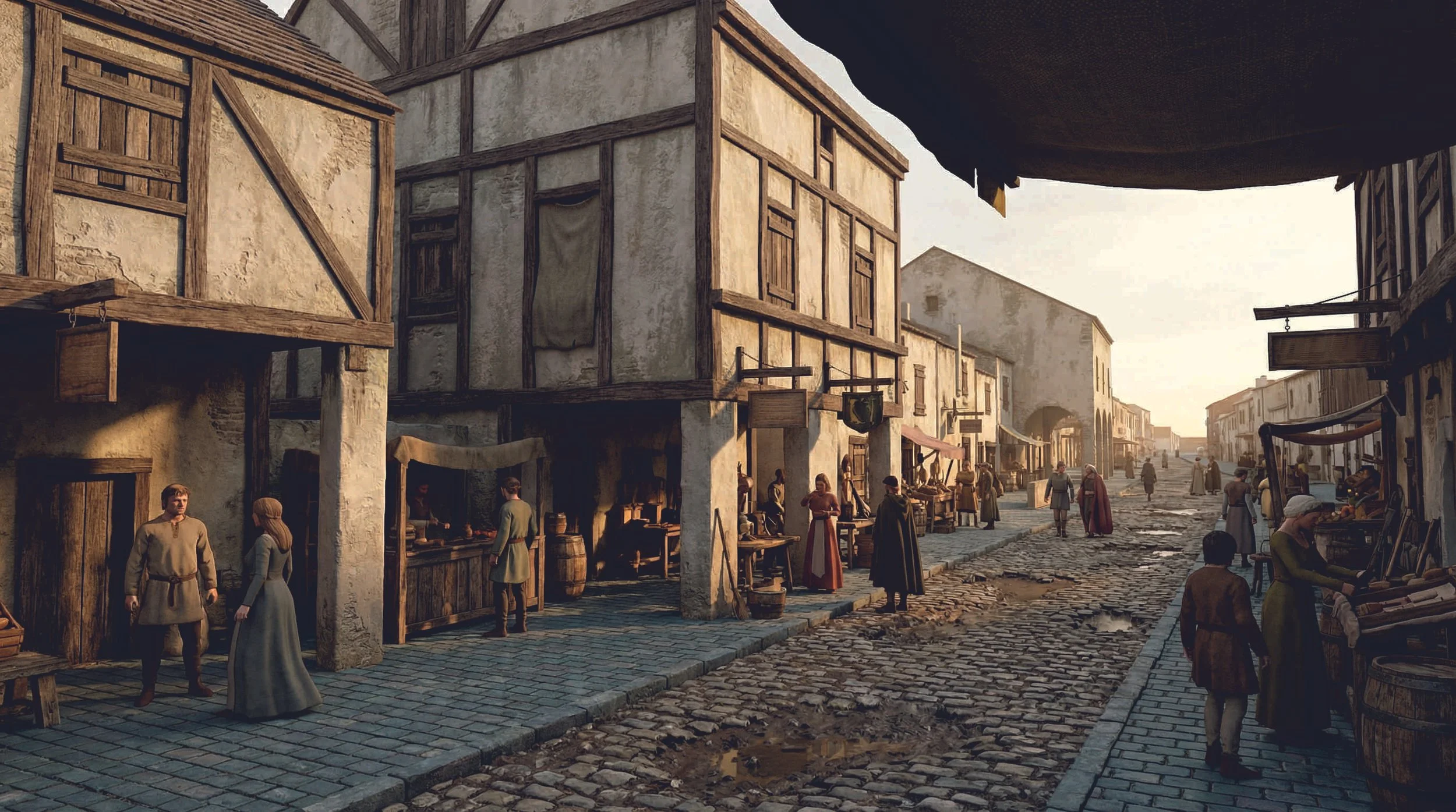
corso Alberto Pio
The Main Characters
Men and women capable of seeing possibilities where others saw only limits.
Artisans, merchants, scholars, builders, and travelers who, through shared work, mutual trust, and curiosity toward the new, transform Carpi into a dynamic city open to the future.
Their relationships become networks of knowledge, collaboration, and solidarity: it is from these active communities that innovation is born.
Ideas that at first seem fragile — a measurement, a silk mill, a water channel, a new technique — gain strength through the courage of those who accept risk and choose to build together.
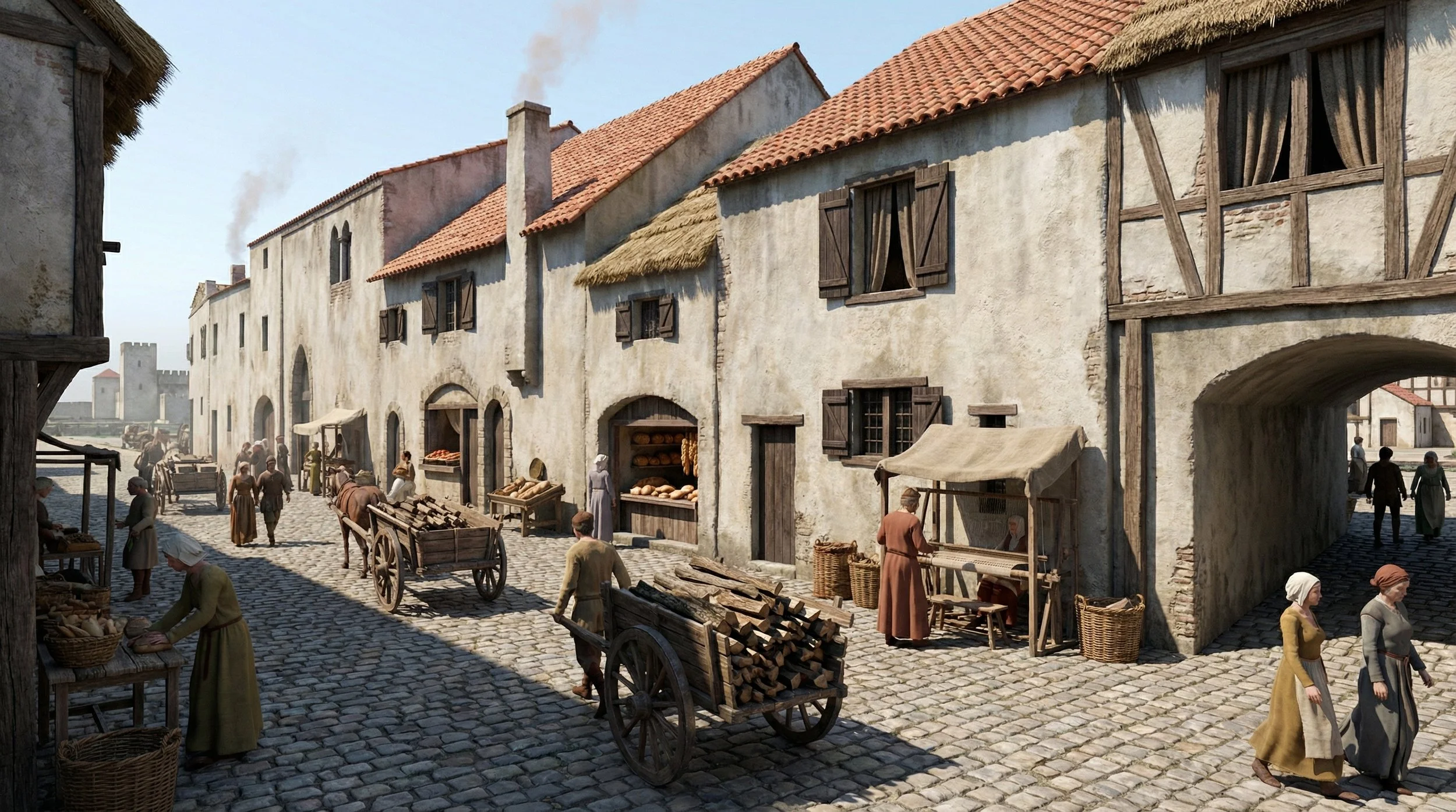
corso Alberto Pio